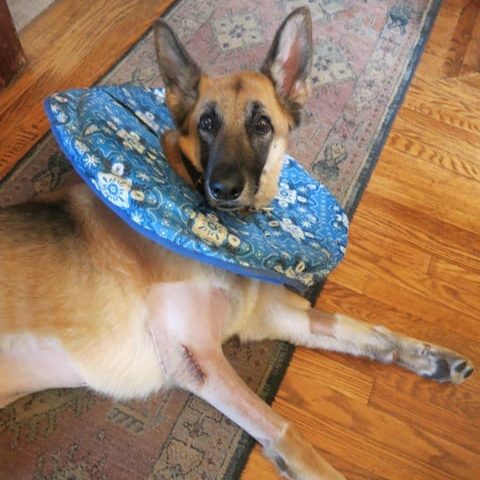
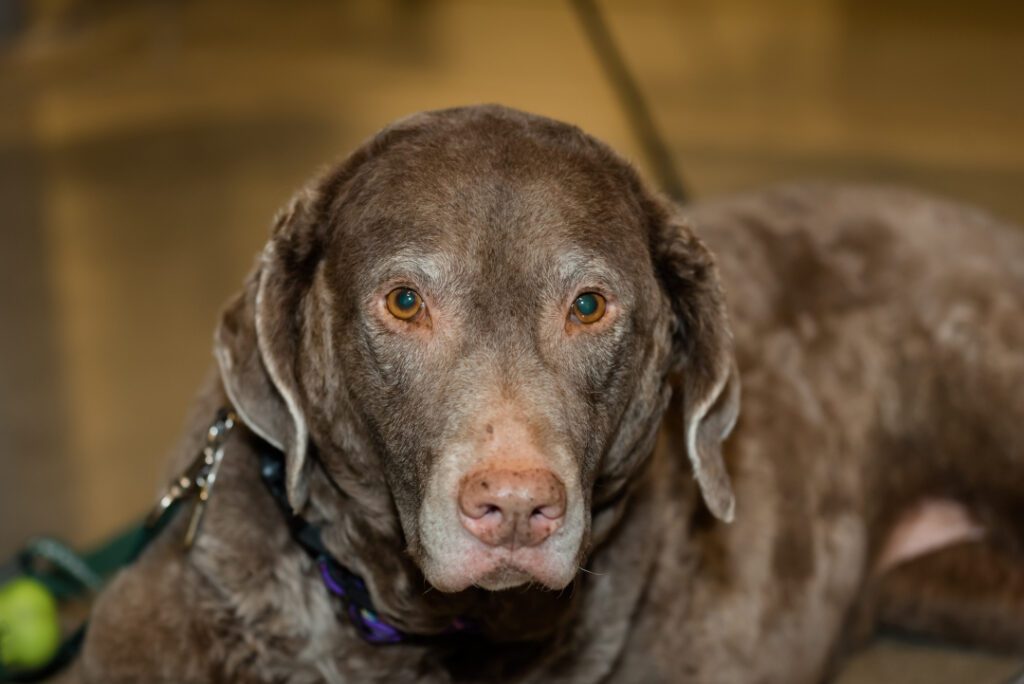
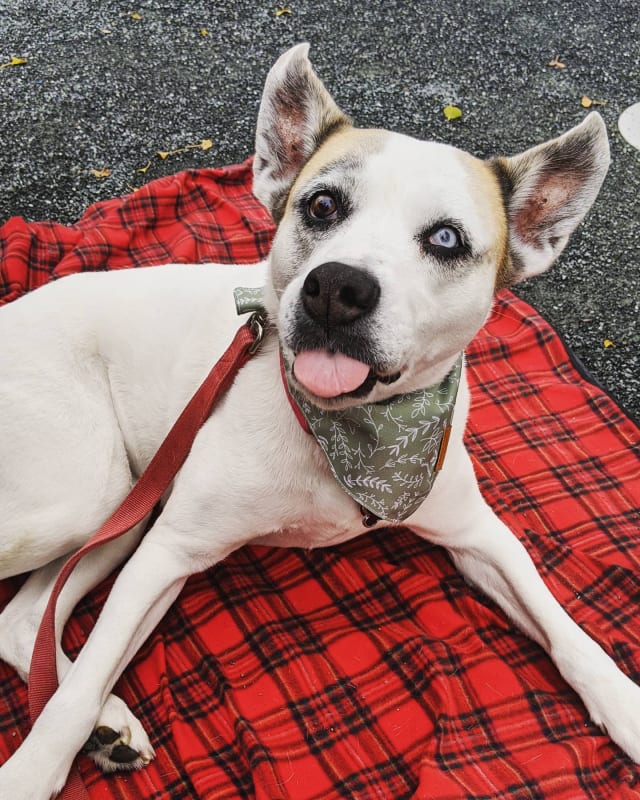
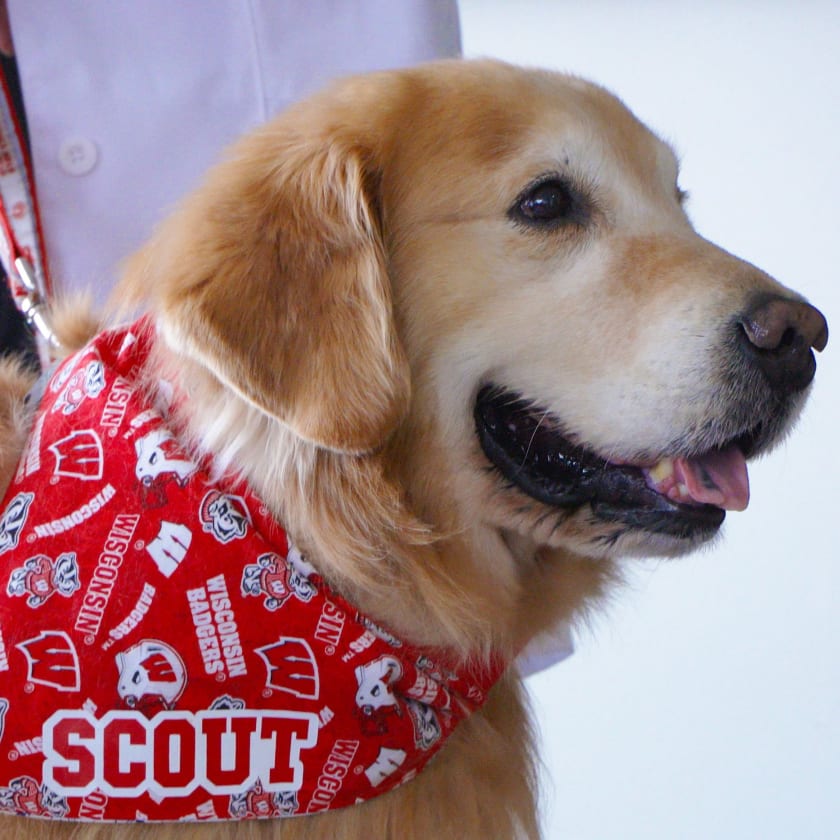
We’ve received 32 surveys so far. The comments have been enlightening, and will serve future Tripawd pawrents well. Some of the heartfelt details pawrents shared included things like:
“I went through “anticipatory grief” where I felt like he was dead even though he was perfectly fine. I think I cried every day for about a month . . . I no longer worry and know he will let me know when he is ready to move forward.”
“he did really well, so i did well, for me it was hell making the decision to amputate because it felt like i was meeting my needs not his”
“Day to do I didn’t worry but as soon as anything seemed ‘different’ I worried. A lot.”
We’ll continue taking responses indefinitely. Stay tuned for our findings from your answers, here in Jerry’s blog and his three legged dog discussion forums. Thanks for taking time out to help us with this impawtant research.
Many thanks to everyone who sent in their responses for Part I of our 2010 Tripawds Treatment and Recovery Survey about Canine Amputation and Cancer Care. Now, here’s Part II, which focuses on canine bone cancer and alternative medicine.
To be entered in the drawing, just fill out Part II of the survey below (and Part I if you haven’t already done so), no later than Monday, March 22 at 12 midnight, Pacific Time.
We’ll continue taking responses indefinitely. Stay tuned for our findings from your answers, here in Jerry’s blog and his three legged dog discussion forums. Thanks for taking time out to help us with this impawtant research.
When pawrents learn that their dog has bone cancer, they often second guess their decisions leading up to the diagnosis. They find themselves wondering “Why didn’t we see it? Maybe we should’ve done this…or that…” Many wonder; if we knew he had cancer sooner, would things be better?
Sarah was one of those pawrents. She and her 5 year old Portuguese water dog, Jake, recently came to us through Tazzie, a mutual friend in Canada. Sarah posted in the forums, looking for advice when Jake’s spinal bone cancer became dramatically worse.
She and Jake had walked a long road up to the bone cancer diagnosis. His behaviors exhibited possible diagnoses ranging from a ruptured disc to arthritis. When cancer was finally discovered, Jake wasn’t an amputation candidate because the cancer (later inconclusively diagnosed as chondrosarcoma) was in his spine.
Sarah found little information online about bone cancer in the spine, and unfortunately we too made the same discovery. Sadly, in just eight weeks, Jake’s health rapidly declined and the intense pain was too much to bear. After a bone biopsy was taken, he could hardly walk and suffered from bouts of intense pain. Sarah released him from his pain on December 12th, just two days later.
Afterward, Sarah told us that she was completely unprepared for the way in which bone cancer in the spine presents itself in dogs. It was distressing not to find even an ounce of hope or ways to cope.
But Jake’s death will not be in vain. Sarah wrote the following summary of her experience, to help anyone else who might find themselves with a dog suspected of having spinal bone cancer. We are grateful for the time she took to help others in this way.
Please read on to learn about the symptoms, behaviors and progression of this devastating presentation of bone cancer.
Swim on, Jake, you will never be forgotten . . .
Primary Chondrosarcoma of the spine – Jake’s Story
by Sarah Crook
Written in the hope that reading it you will be more prepared to cope with this awful disease than I was. The progress of the disease from no symptoms to death took 8 weeks. The cancer was located in the C7 vertebra (lower neck).
Early signs (first two weeks):
A stiffness that developed after 15 to 20 minutes walking. Jake woke up in the morning seemingly fine – the stiffness was only obvious with exercise and occurred even with moderate exercise, like leash walking. Round the house Jake’s activity seemed normal and the stiffness was not apparent (this pattern seems unlike what I have read about arthritis where the dog wakes stiff, then it gradually wears off).
A reluctance to go up/downhill that I noticed when walking Jake off-leash. Jake still followed but lagged behind.
A cautious approach to going up/down stairs especially after a walk when he had stiffened up
Cautious approach to getting in and out of car – fairly subtle. Just a hesitation before jumping and a preference to climb in rather than jump..
A reluctance to stretch his head down to eat or drink. Backed off and barked at his food bowl until I raised it up.
Very subtle – I only thought of this in retrospect – sometimes a slight unsteadiness when he cocked his leg for a pee.
Middle period (middle four weeks):
After 2 weeks Jake was seen by a vet who physically examined him and found stiffness in his neck and a reaction (growl/snap) when upper back was pressed hard. Soft tissue injury was suspected and Jake put on Metacam and restricted exercise.
On Metacam he seemed livelier around the house and more playful – but the stiffness and stiff-legged gait still continued when exercised and as things progressed, would start after only 5mins. A video clip taken at this time shows his normal walk when setting out, then the stiff-legged ‘walking on eggshells’ gait that he would suddenly adopt; and his cautious approach to going down a step.
After 14 days of Metacam and no obvious improvement, Jake was put on Robaxin – a muscle relaxant. Robaxin made him much WORSE. He was clearly uncomfortable in the house – standing looking miserable, seemingly afraid of sitting or lying down (as if he thought it would hurt – which it probably did). His back legs became noticeably weak and he hard difficulty climbing upstairs (ataxia). I was especially aware of him being restless through the night (prior to this he slept well) – he would sleep for a few hours then wake apparently in discomfort and take 5 or 10 minutes to lever himself up and settle into a new position. Later, I found out from the oncologist that this was not unexpected – Jake’s muscles would have been protecting the painful part of his spine, and with the muscle relaxant they could no longer do this.
After 5 days took him off Robaxin and the vet put him back on Metacam. Ataxia lessened, slept well again, things seemed to improve – but in retrospect he did not recover to pre-Robaxin level. Jake started doing ‘girlie’ pees and if he tried to cock his leg consistently lost his balance. I later learned the weakness in his back legs and the uncoordinated gait (‘ataxia’) that developed were the result of the tumour and/or associated inflamed tissue compressing the spinal cord.
End Phase (last two weeks):
Increasing unsteadiness of back legs so took Jake once more back to his vet. Same stiffness in neck and sore place on upper back. Blood samples were taken to rule out the slight chance of a tick born disease and vet referred Jake to a surgical specialist and a neurologist.
Surgeon examined Jake and suspected ruptured disc – recommended MRI.
Neurologist examined Jake and suspected lesion in lower neck and upper back (either two separate ones or one big one) Recommended CAT scan.
Cat scan showed tumour in C7 vertebra about 2×2cm in size, and a biopsy was taken. I met with an oncologist and decided to have one radiation treatment to see if it would reduce the pain and inflammation. If not, I would have him put to sleep.
Last Two Days:
Jake came home on a Thursday afternoon after having the CAT scan and bone biopsy the previous night. He was on Perkocet but a couple of hours after getting home had a bout of severe pain – later I thought this episode must be similar to ‘breakthrough’ pain suffered by human cancer victims.
He had two more of these attacks on Friday night and then early Saturday morning, in spite of having started on stronger pain relief (morphine and Gabapentin – and more Metacam, although he deteriorated so fast I never got around to adding this to the cocktail) and they all followed the same pattern – 5 to 10 minutes of increasingly fast panting, signs of acute pain (groaning and struggling to his feet to stand hunched over, head hanging, tongue lolling) lasting 10 – 15 minutes; 20 – 40 minutes of gradually winding down (I could get him to sit on my lap and would rub him and try to calm him). On Saturday I decided enough was enough, it was too late to try radiation therapy, and I had him put to sleep that afternoon…
In retrospect
I am not sure if I wish I had asked for an X-ray early on and found the tumor sooner. Early diagnosis would have meant when he could still run around I would not have been limiting his exercise and keeping him on-leash all the time… and there would have been time to plan treatment such as radiation therapy. However, the bone biopsy would also have been done sooner and maybe even early on the consequences (huge increase in pain and decrease in mobility) would have been the same as below – see next point.
I would not have had the bone biopsy done without much more careful consideration – I blame this for the rapid deterioration in Jake’s condition at the end – hugely increasing the pain and causing increased inflammation that severely impacted his mobility and comfort level: he could hardly walk when he came home his back-end was so uncoordinated and weak.
I would have asked the oncologist for pain meds. to deal with the ‘breakthrough’ pain (if indeed that was what it was). If there aren’t any effective drugs to deal with it, I would have at least discussed what I could/should do if these attacks happened.
I would have had the consulting oncologist leave a prescription for stronger pain medication with an 24hr animal clinic in case Jake suddenly got worse in the night or at the weekend when she could not be contacted.
I would have got the contact details of a call-out vet who could come and put Jake to sleep when Jake’s own vet clinic was closed….
Jake’s own vet and the specialists he referred me to were consistently caring and conscientious. Both contacted me this week after I wrote to them raising some of the issues I mention above. They spent nearly an hour going through things with me, so I think they deserve credit for this, especially my vet, as he must have known the length of time in getting to a diagnosis would be a tricky subject to discuss.
Not a happy end to a bright and loving creature. If you are facing the same I know reading the above will be distressing – but I hope it will help you make the right choices for your pet.
I’m wondering if anyone out there finds the term “Tripawd” notable. And if so, would they mind letting Wikipedia know?
no⋅ta⋅ble [noh-tuh-buhl] -adjective
1. worthy of note or notice; noteworthy: a notable success; a notable theory.
Nearly two years ago now, my people attempted to submit an entry for “Tripawd” to the popular online encyclopedia. They were abruptly denied, so they are not about to try that again.
According to this archived discussion about deletion of the proposed article, the entry was apparently considered no more than a self-serving definition that had no place being included on Wikipedia.
Here is what the editors had to say:
“The article seems to be mainly promoting the linked website…I don’t think notability is really demonstrated.”
“Evidence points toward the deliberate promotion of a non-notable neologism”
“Doesn’t look notable to me and even if the term /did/ exist notably, there seems to be undue weight given to the website”
Yet, aren’t these Wikipedia articles “mainly promoting the linked website”?
And if you don’t mind … if Wikipedia editors allow the slang term “camel toe” as a notable entry, certainly they should accept Tripawd as noteworthy. I wonder if those at Wikipedia believe an adolescent and grotesque slang word is really more significant that what many animal lovers call their three legged companions. Besides, is that article not a definition itself?
But I digress, suffice it to say that no Tripawd article exists on Wikipedia. And with rules against starting articles about yourself, we do not intend to try again. But we’re not about to stop anyone else out there who may be familiar with submitting articles for Wikipedia from giving it a try. Just keep in mind, the entry must be notable, and include adequate references.
ne⋅ol⋅o⋅gism [nee-ol-uh-jiz-uhm] -noun
1. a new word, meaning, usage, or phrase.
Since the original Tripawds article we submitted to Wikipedia has been deleted, we can’t share what it said exactly. But, at least part of the content seems to have found it’s way to this entry in the recycle bin of Wikipedia. Edited for current relevance …
The word Tripawd is a colloquialism that is rapidly becoming widely used to refer to animal amputees. Tripawd is defined as: “(Noun) an animal who has had one leg removed”.
The term may have been first coined by Jim Nelson of Eureka, CA in November 2006, when he registered the domain for a website dedicated to his dog Jerry, who underwent amputation surgery of the front leg after being diagnosed with canine osteosarcoma. Since then, the Tripawds website has grown to become the leading social networking community for caretakers of three-legged dogs. And Jerry’s Tripawd adventures have been featured on the popular PBS show Nature, as well as in various other radio and print media outlets.
After searching for online resources about caring for a three-legged dog, Nelson discovered common reference to canine amputees as “tripod” dogs. The distinct spelling of Tripawd is meant to be less derogatory and simply refers to the fact that a dog or cat with only three legs (or paws) is literally tri-pawed, or a Tripawd.
If the slang term Tripawd is still considered a “non-notable neologism” – even though Camel Toe is acceptable – perhaps the more appropriate entry might be one for Tripod Dogs that mentions the colloquial term “Tripawd”, with appropriate edits to the the disambiguation page for Tripod of course. Or perhaps, an article is warranted for Jerry the Three Legged Dog. After all, PBS considered his story notable enough to feature in the award-winning series, Nature.
Since almost two years have passed, maybe the Wikipedia editors will now realize the significance of Tripawds. There are certainly a lot more notable references now …
Ever since Spirit Tika posted about her camping adventure in the Tripawd Discussion Forums, I’ve been thinking about an old Native American character who told us this joke, back in Bemidji, Wisconsin:
This Ojibwe and a Choctaw meet in a bar. The Choctaw asks the Ojibwe about the three-legged dog by his side.
The Ojibwe says, “A dog this good, you can’t eat all at once.”
True story. Well, meeting the old guy was anyhow.
So, in honor of this funny old guy, my people finally put together this humorous Tripawds BBQ apron, because another important lesson I taught them in our travels is that laughter is indeed the best therapy.
From diagnosis through amputation and recovery, to hospice cancer care, people need to follow the lead of us dogs and make the most of each day, while laughing at any adversity life may throw your way.
Our recent Ask A Vet chat with Dr. Michael Lucroy was a big hit with Tripawds members! The discussion was informative and continues with this chat transcript topic in the forums.
Many thanks to Dr. Lucroy for providing some insightful answers and interesting ideas about the diagnosis and available treatments for canine cancer. Especially interesting to note was his discussion of NSAID use prior to amputation for cancer dogs…
‹oncovet› Starting on NSAIDs (Rimadyl, Deramaxx, Previcox, etc.) will make dogs with arthritis and early bone cancer more comfortable. If bone cancer is there, using NSAIDs first simply delays diagnosis.
He also had some excellent advice for those dealing with possible spinal metastasis in their pups…
‹oncovet› Spinal metastasis do occur in osteosarcoma. About 5% to 10% of dogs will have metastasis at diagnosis. Almost all dogs develop them later. The use of chemotherapy tends to increase the risk for bony metastasis. In the spine, we generally have fewer surgical options, so we go for pain control. That often means radiation therapy in combination with pamidronate or similar bisphosphonate drugs.
Other issues addressed included the use of Artemisinin and Metronomic therapy for fighting cancer and treatment options for subcutaneous metastasis, or subq mets. More information can be found in the transcript and Dr. Lucroy’s new book, The No Nonsense Guide to Cancer in Pets, or his veterinary oncology blog.
Stay tuned for the next live chat, or drop by to see if anyone is online now. You can usually find my pack hanging around the chat room most evenings but we can’t always be there, so schedule your own anytime!
My pack met Peyton and his people at the Morris Animal Foundation’s K9K walk they attended in Estes Park, CO a few weeks back. He was just a couple weeks out from his amputation and looking great! Just see for yourself …
Stay tuned to Wyatt’s blog and maybe he’ll get around to posting the video of all the fun he had at the dog park after the walk!
They came to support Luke, Hudson and Murphy, and to raise awareness of the canine cancer epidemic.
During his week in Washington, Luke presented to congressional representatives to urge them to fund canine oncology studies that will benefit both dogs and humans alike.
Neither rain nor a last minute route change by the National Park Service could stop them.
Luke Robinson, founder of 2Dogs 2000 Miles said
“We had a very nice turnout for our first canine cancer caucus. It was very picturesque walk – over the Potomac, around the Lincoln Memorial, next to the reflecting pool to remember the ones we’ve lost to cancer, then past the Washington Monument.
With perfect sunny weather and hundreds of three and four legged dogs and their humans, we walked, we talked, we played, we had a blast. There were interesting guest speakers, prize drawings and we met some really cool pawrents, including the President and CEO of Morris, Dr. Patricia Olson! Here is Wyatt Ray, giving her a big SMOOCH.
It felt so great to know that collectively the walk raised over $12,000 for Morris’ Canine Cancer Campaign! Wooo hoo!!!
Back in California on the very same day, our dear Team Tripawds members, Shelby, Caira Sue, Codie Rae, Cemil, and Montana met up in the San Francisco Bay Area.
Many thanks to the generous pawrents who helped make Team Tripawds a reality once again:
Renee Agredano; Cindi Crowder’ Jack Crowder; Barbara Friedman; Diane Hollenbeck; Mary James; Ralph Kanz; Seanne Moulton; Jim Nelson; Martha Rowe; Jane Winston
See you all at the next K9K Walk!
(Our apologies if you signed up later and your name isn’t listed, this is the most current Team Tripawds list we have. Let us know if you did, we’d like to thank you!)
First, there was tripawds.com, where my people shared the story of my own osteosarcoma survival for nearly two years.
Then came the Tripawd Discussion Forums, which offered even more support and resources for those coping with canine amputation and bone cancer from our growing number of members. Next we introduced the Live Tripawds Chat.
Today, we are hoppy to announce the new and improved Tripawds Blogs community – a special place where anyone can share tails about their own three legged dog adventures!
Whether your pup is three legged from birth, by accident, or because of bone cancer, we hope you will come join our community of Tripawds Blogs to share his or her story today. Simply sign up for your Tripawds Blog now and you’ll be dog-blogging in no time!
Tripawds Blogs are an easy way to share your amazing dog’s story and photos with the world. And best of all, it’s free!
In just a few minutes you can start your own blog which will appear at yourblogname.tripawds.com. Just sign up and select the blog name of your choice and give it a title. Or, just type your desired blog name into your browser and see what happens!
Existing Tripawds users are already a member of this blog. Just be sure to log in before signing up and you will be automatically recognized and asked to create another blog.
The upcoming series of posts here in the main Tripawds News blog will cover all the new Tripawds Blogs features and discuss avatars, plugins, widgets, upload space, Supporter blogs, and much, much more. For now, you may find our WordPress tutorial videos helpful in getting started and making the most of your new blog. Please post any questions in the Tripawds Technical Support forum.
My people have been working extremely hard behind the scenes here for the past few months to make this happen. But this exciting new community wouldn’t be pawsible without the generous support of our Tripawds pack. Earlier this year, they helped us acquire the hosting resources needed to maintain this new and improved website. Thanks to their kindness, your inspawrational stories can now help us show the world that … It’s better to hop on three legs than limp on four!