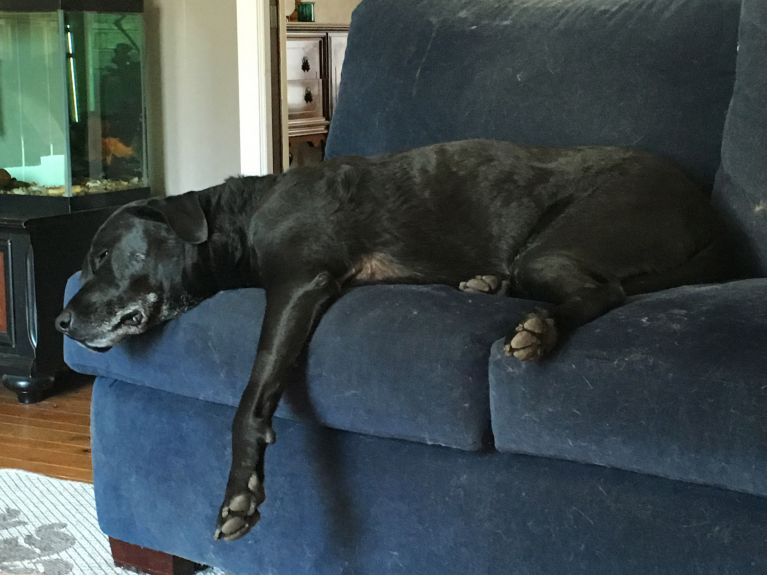
If your home is like ours, the furniture is for all family members, including those with fur. But furniture jumping puts enormous stress on an amputee dog or cat’s body, and over time it can cause damage.
The good news? You don’t have to give up the cuddle sessions. You just need the right gear and a little patience to train your three-legged hero to use pet ramps and stairs. Here’s what works, straight from Tripawds members who’ve been there.
Why Ramps and Stairs Matter for Tripawds and Senior Pets
Every time your Tripawd leaps off the bed or launches onto the couch, the landing force hits just three limbs instead of four. Over time, that jumping increases the risk of muscle strain, joint problems, and chronic pain.
A well-placed ramp or set of pet stairs can minimize the risk of injury.
As Purrkins’ mom put it after finally getting her boys set up with multiple stair sets around the house:
“He uses all of his stairs! Total will be 4 sets. This helps him getting up and down without such a strain on his other 3 legs. It also helps his Mom and Dad worry less!”
Ramp vs. Stairs: Which Is Right for Your Tripawd?
Both pet furniture accessories have their place, and many Tripawds families use both.
Ramps offer a smooth, continuous incline. They’re ideal for rear-leg amputees, larger dogs, and car access. Ramps are usually foldable, which makes them great for travel. But many pets find the slope intimidating at first, especially if they are more sensitive to depth-perception challenges (more on that below).
Stairs/steps are more compact and work well indoors. They tend to feel less scary for pets who freeze up on an open ramp. After some training, dogs and cats know how to use them because steps give a clear “landing zone” at each level.
Are Ramps or Stairs Better for Amputee Pets?
Several members in our Ramp Recommendations discussion noted that after surgery, they switched from stairs to ramps. They say that stairs felt awkward for their pups and put too much strain on the remaining leg.
When it comes to cats, our Ramp Suggestions for cats thread shows that many feline Tripawds pet parents prefer low-profile steps over ramps. Apparently many three-legged cats are often more willing to navigate defined steps.
The Visual Cliff: Why Your Tripawd Seems Terrified of Ramps
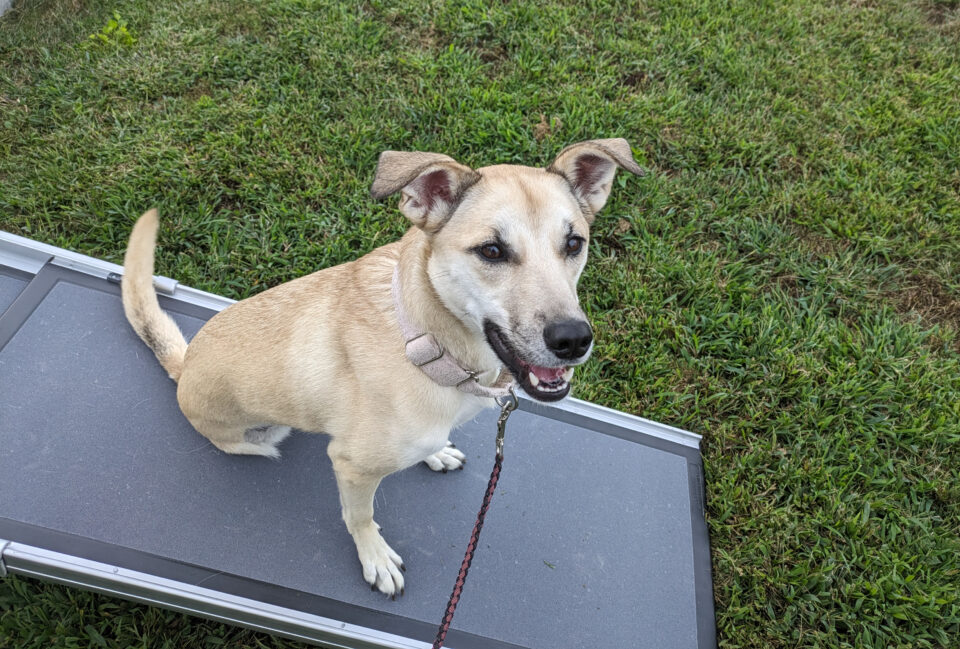
No, your new amputee isn’t being stubborn because they don’t want to use that fancy ramp you just bought. They’re scared, and there’s real science behind it.
Many animals can struggle with depth perception when looking down from height. This is a phenomenon known as “the Visual Cliff”.
Look at it through your Tripawd’s eyes: a ramp angled above the floor can look like a terrifying drop with no clear bottom. Adding DIY sides gives your dog visual markers so they can navigate it without fear of falling off.
As longtime member Karen Riley said in our dog ramp recommendation thread, their TriPug Maggie wouldn’t use any of three different ramps they built.
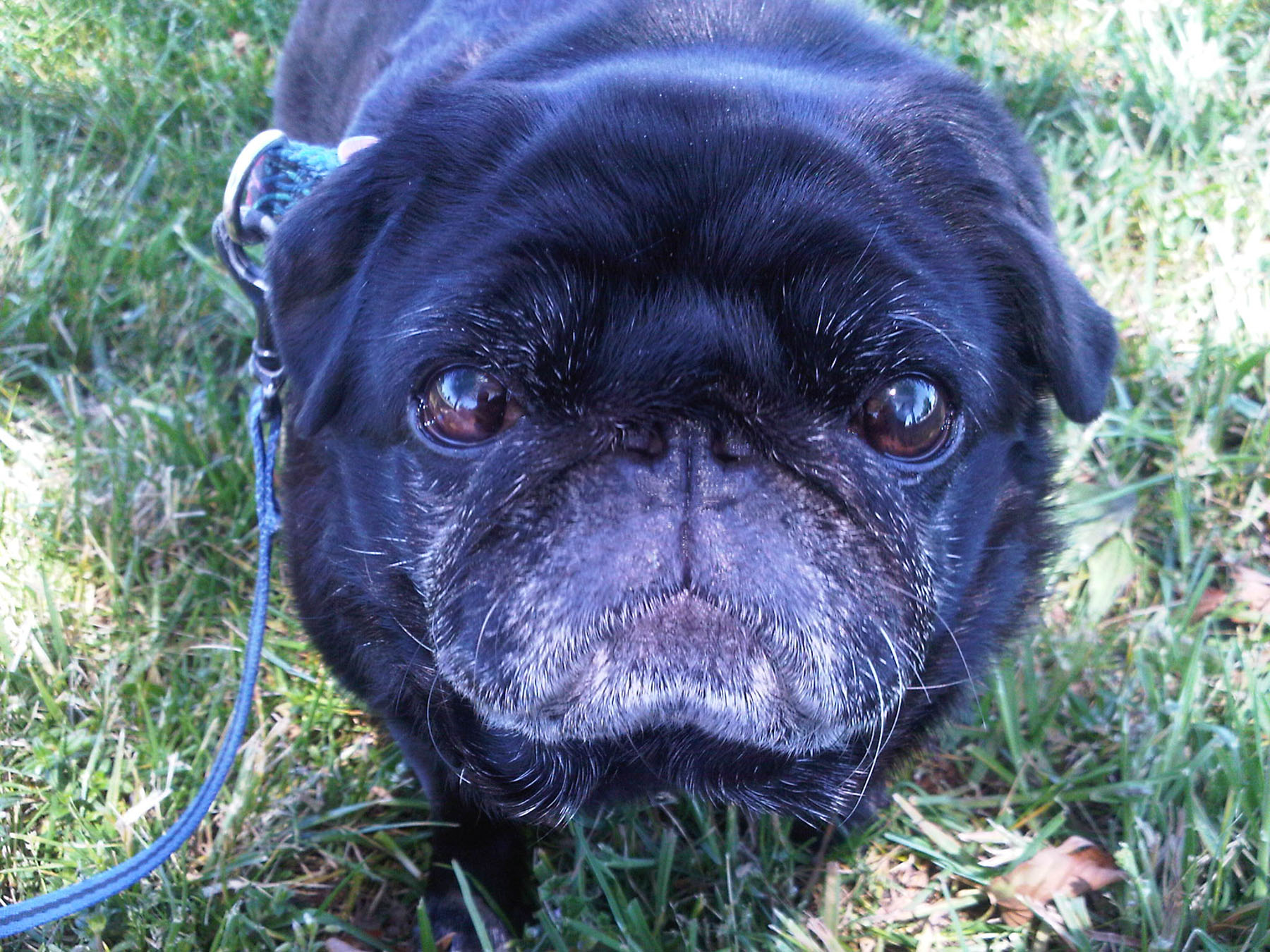
My first Tri Maggie would not use a ramp, I built 3 during her tripawd years and she WOULD NOT even try. She also wouldn’t go up or down open stairs or walk on decks when she could see light between the boards. Sometimes she would hesitate when types of flooring changed- like carpet to linoleum
@Karen Riley (see “Accommodations” in Maggie’s blog)
A dog’s depth-perception difficulty can make every ramp feel like a cliff edge.
The fix? Starting to ramp train with the ramp laying flat on the ground (see Tip 1 below).
If you’re struggling with ramps and stairs for your new Tripawd, here are some member-tested strategies that might work.
3 Tripawd Ramp and Step Training Tips from the Tripawds Community
1. Start Flat, Then Gradually Raise
This is the single most effective training method reported by Tripawds members over the years.
Place the ramp flat on the floor and let your Tripawd walk back and forth across it, getting used to the texture, the surface give, and the feel underfoot. Then raise it a few inches at a time over days or weeks.
Otis’ mom described this method in our ramp training forum:
“The only way we could get him to use the ramp was to lay it flat on the ground and have him walk back and forth over it many times.
Once he seemed comfortable with that, we made him sit on it. That seemed to help a lot.
We found that along with the treats/ training on flat ramp, if we have a person standing on either side of the ramp, Otis is more likely to feel safe going down/ up.“
Koko’s mom Andrea Beeston shared a similar approach while ramp training her greyhound. She started slow and built confidence at each height level before moving on.
At first she was really put out and nearly hurt herself trying to jump over the ramp seeing it as an obstacle.
I then remembered that she had hesitated to walk on towels I had put down on the floor to get the water and dirt from her paws when she came inside.
It didn’t take long to get used to them so I picked one up off the floor and laid it over the ramp. The next time she went outside Koko walked straight along the towel covered ramp.
I next moved the ramp into the doorway out into the yard and again put the towel on it. This time she tried to work out how to get around it, but there was no way to, so she walked down.
Again, I removed the towel and for the rest of the day she has gone in and out without a problem.
With a breed as sensitive as a greyhound, patience and incremental progress made all the difference.
A nightlight near the ramp can help too. Some pets are hesitant not just because of depth perception, but because they simply can’t see the ramp clearly in a dim room.
2. Teach One Direction at a Time: Down First
It seems counterintuitive, but teach going down before going up. Injuries are far more likely on the descent, so build that confidence first.
And use a support harness
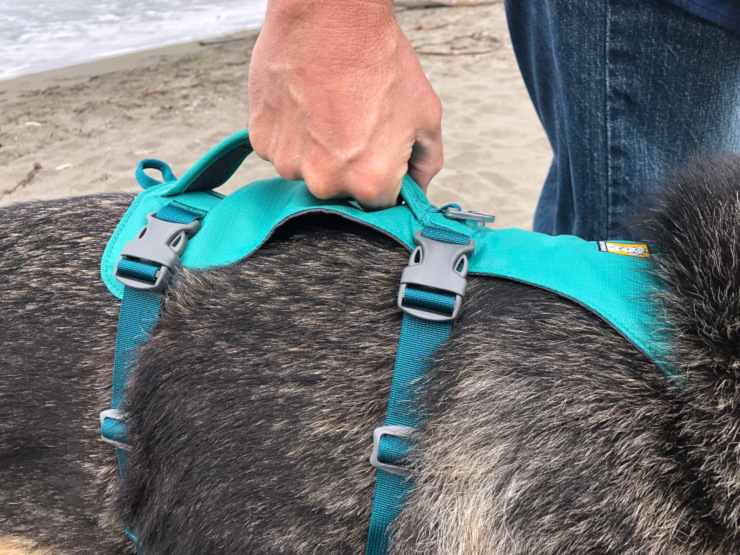
There’s a reason the Ruffwear harnesses in our Gear Shop are a favorite in the our community.
That top handle lets you gently steady your Tripawd on the stairs or ramp without pulling or dragging.
Cassie’s mom described it well in our ramp advice thread:
“I held onto her harness and walked right next to her, basically forced her to use the ramp. At first she would step off the side before she got to the bottom… but she eventually got the hang of it. Once she got used to it, I was able to use it to get her in & out of the car, too.”
Give each direction at least seven days of practice, more if your Tripawd needs it. There’s no rush, and pushing too fast can create a setback.
3. Use Food, Praise, or Whatever Sparks Joy, Every Time!
For the first few weeks, don’t expect miracles. As your Tripawd grows steadier on their feet, the confidence to try a ramp and stairs will follow.
Consistent motivation is everything. Place a high-value treat at the top of the ramp or final step, keep the praise flowing, and reward every attempt, not just the successful ones.
Cadence’s mom shared the experience: her husband gently lifted their dog into the car until she was steadier on her feet:
“When she was more confident, she flew up that ramp. I would give her a treat when she went up it, so I think it helped. Now she is like an old pro.”
When treats don’t work, GO BIG!
What’s your Tripawd’s favorite toy? Use it as a lure. A piece of steak mid-ramp or a beloved person waiting at the top can work wonders too.
In Lexi and Mark’s car ramp discussion, members found that loading a dog ramp with familiar scents and creating a positive routine around car time was the secret to helping them into the car.
It was difficult to begin with after his amputation, but we used a sling under his back end to help to begin with. He does it on his own now, but we have to make sure to line him up to it straight because he’s a ding dong and will try to hit it from the side and skip the bottom few steps and it just never works out well haha.
Give a treat before, treat after, and use a happy voice throughout.
What to Look for in a Ramp, Steps and Stairs
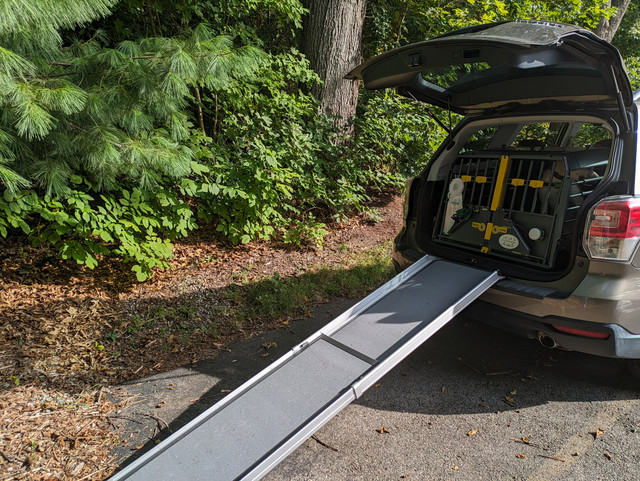
Whatever you buy, these features matter most for Tripawds:
- Non-slip surface: textured tread, carpet, or rubberized coating. A slippery ramp is worse than no ramp.
- Side rails: especially important for pets with visible reluctance or those prone to stepping off the edge.
- Gentle incline: a longer ramp means a shallower angle. For SUVs and tall vehicles, length matters more than you’d think.
- Weight capacity: don’t guess. Check the ramp and steps weight limits against your pet’s current weight with room to spare.
- Stability: the ramp shouldn’t wobble or shift when your pet is on it.
If you already have a furniture ottoman at home try that first. It’s a great tool to help your Tripawd access furniture if they’ll feel comfortable using it.
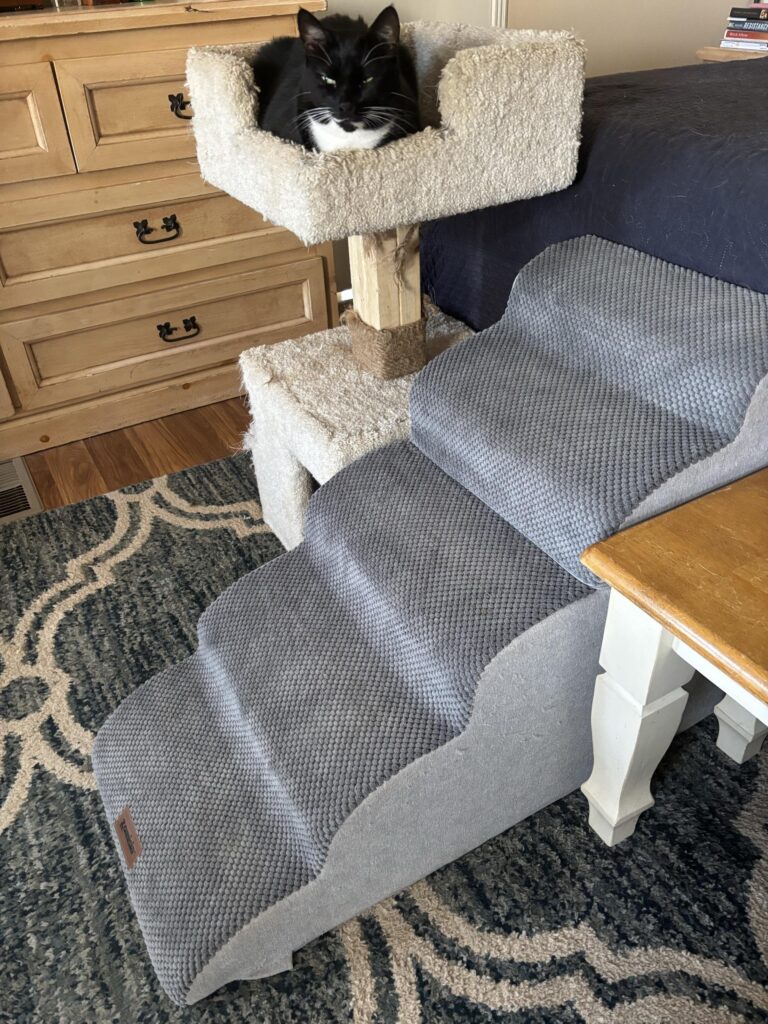
I had my hubby cut down all of our ottomans in the den and TV room to 10 inches high so when Rosie is all healed up, she will still be able to easily get up on the sofas with us.
@Jeanne, Tripawds Discussion Forum Member
Recommended Ramps and Stairs from Chewy
Our affiliate partner Chewy carries a wide range of ramps and steps for dogs and cats. Here are categories worth browsing based on your Tripawd’s needs.
For indoor use (bed and couch):
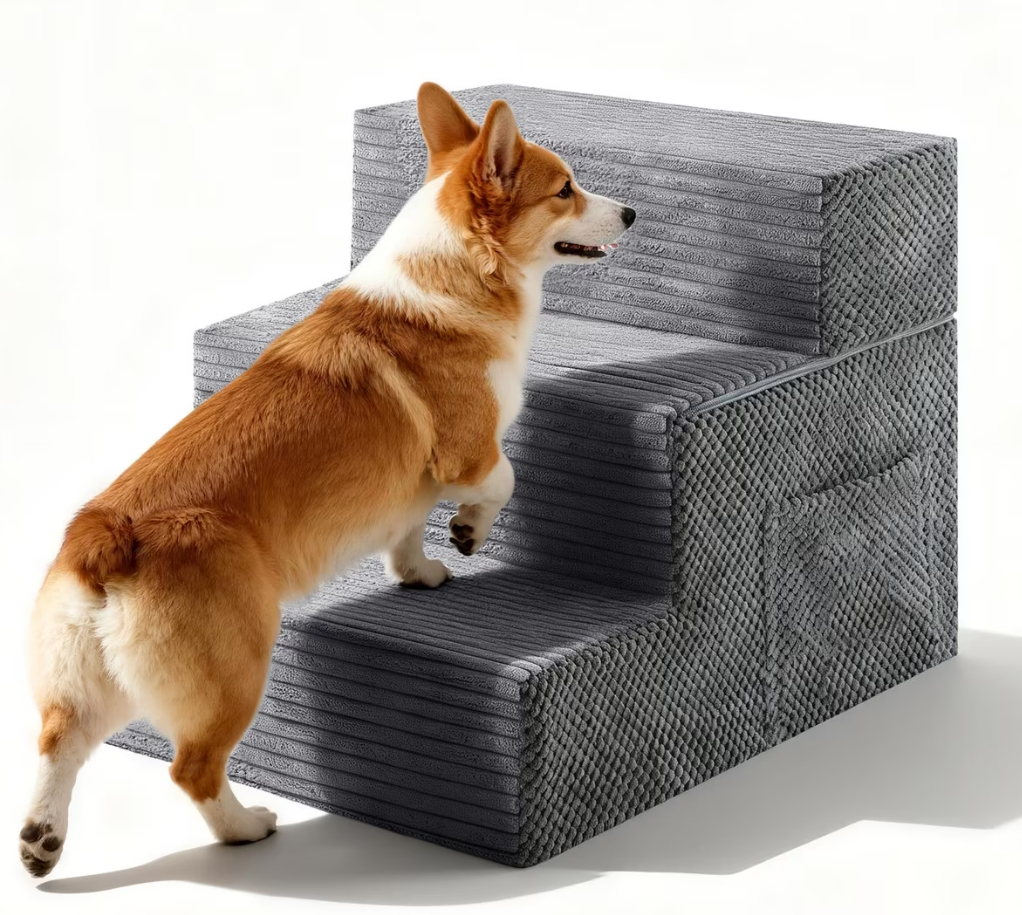
Browse Dog Steps & Ramps for Your Bed. These are foam and carpeted options that blend into your home decor and provide soft, grippy landings.
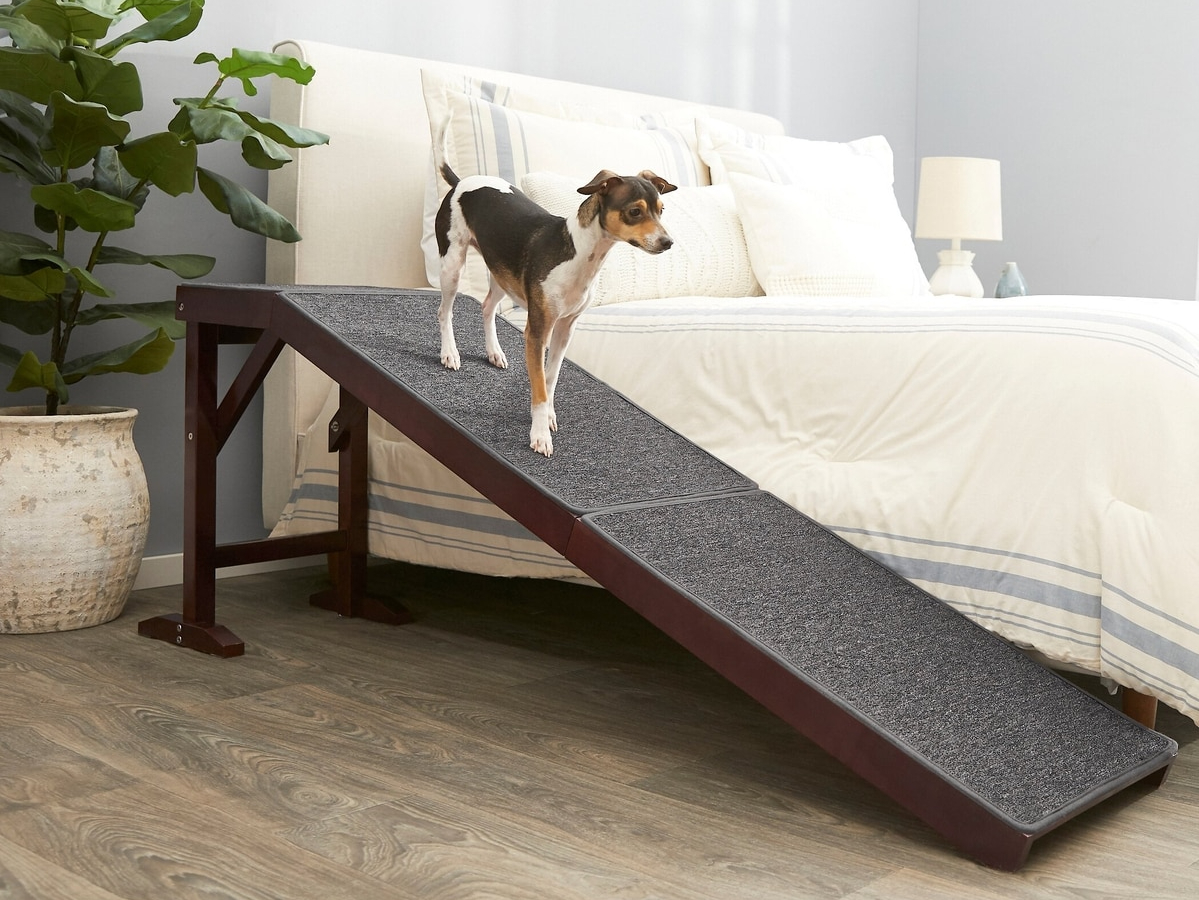
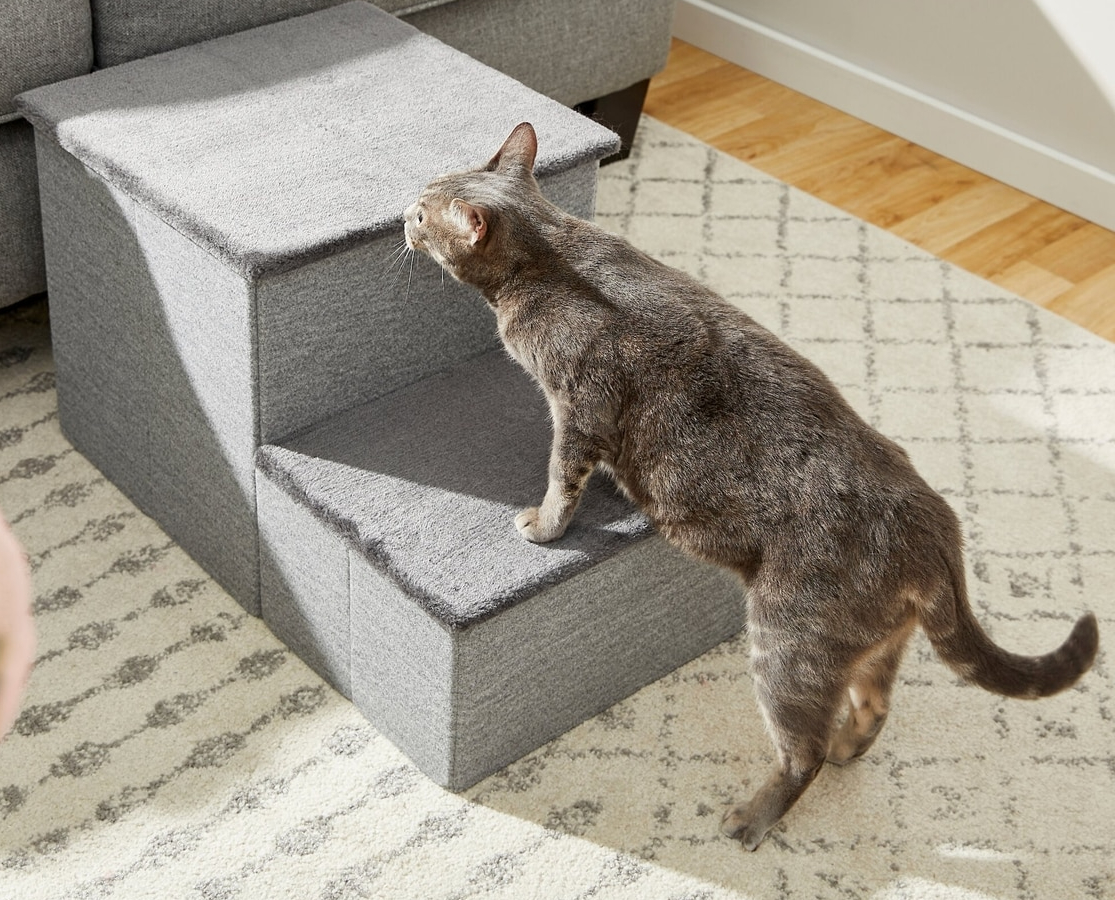
The Frisco Deluxe Wooden Carpeted Ramp (shown below) gets great reviews from pet parents using it for both dogs and cats on furniture and porch steps.
Got a Trikitty? Check out Chewy’s Cat Stairs & Ramps collection. There’s adjustable-height options and foldable designs ideal for one-legged leapers.
For car and SUV access
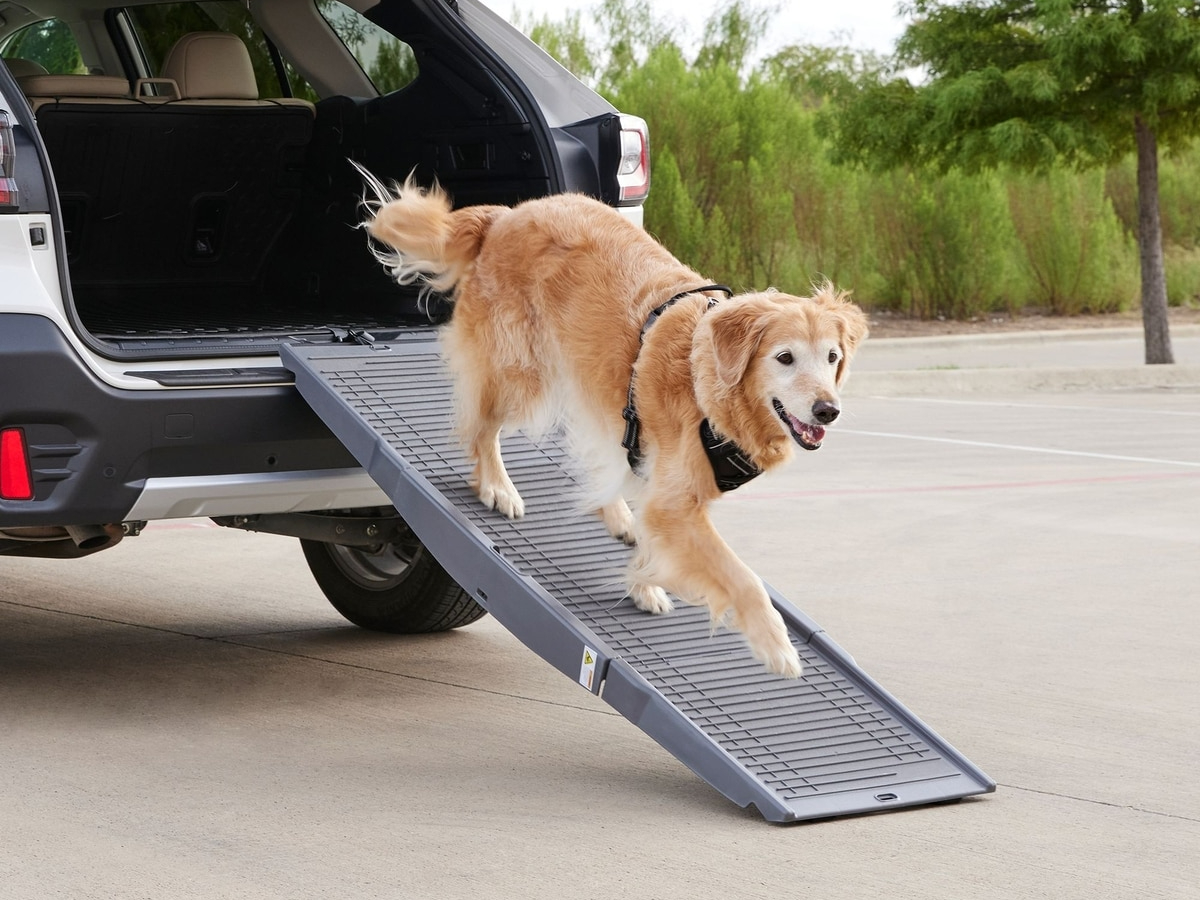
The Frisco Tri-Fold Travel Dog Car Ramp is a great choice. It’s designed for SUV or truck bed use and can support dogs up to 150 lbs. It folds in two places for easier storage and transportation.
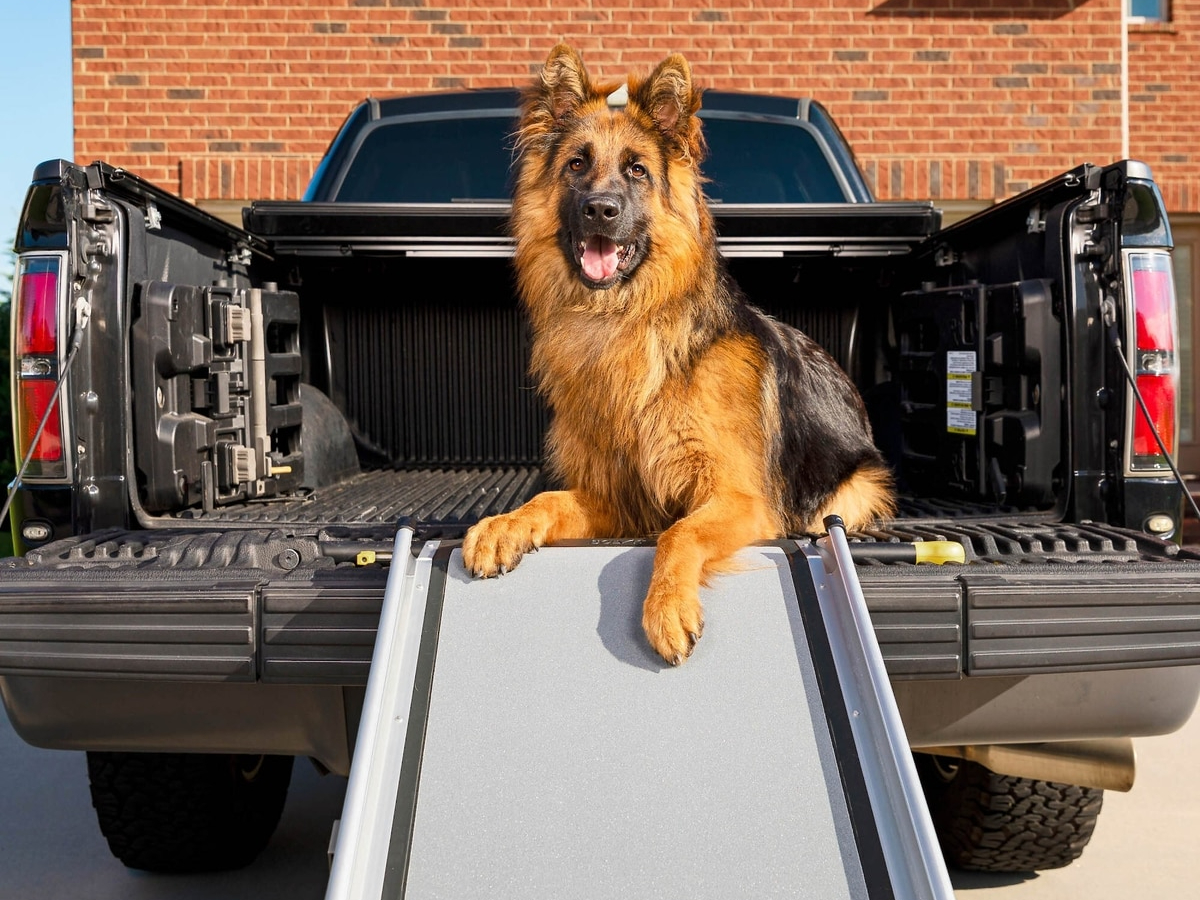
Even Giant Breed Tripawds can safely use car ramps!
The PetSafe Happy Ride Telescoping Dog Car Ramp can hold up to 300 pounds. The telescoping design makes it more compact so it’s easier to use and store. It can also extend to reach your vehicle, has high-traction tread, and works with most cars, minivans, and SUVs.
Browse Chewy’s full curated list of Best Dog Steps & Ramps 2026, updated weekly based on top-rated reviews!
It Can’t Hurt to Try Step and Ramp Training for your Tripawd, But Patience is a Must
Ramp and stair training takes time, and some days your Tripawd will want nothing to do with any of it. That’s normal. Go slow, keep it positive, and never force it.
Most Tripawds get there, and once they do, you’ll both enjoy more independence and hoppier days ahead!
We are fostering a 10 month golden puppy (Forrest) that was born with a congenital right front leg. We’ve had him since he was 3 months. He’s been going to rehab once weekly for several months. We’ve had Golden’s all our life and as he got older we decided to pull out the ramp we used for one of them. It took a little while for him to get use to it but time and patience and treats work. We did have him walk on it when on the ground. We also have a Help Em Up harness w/2 handles one on top front and one at the rear. He now goes up it without any hesitation and w/o any treats. He likes to go to rehab and he likes going for rides.
Diane thank you for sharing Forrest’s story with us. Great job teaching the ramp training! You are great parents to him! Consider hopping on over to our Support Circle, we’d love to follow along with your adventures.