If you’re reading this, chances are your Tripawd is already doing something amazing: living a full, active life on three and inspiring you every day. But here’s something worth thinking about, even on the good days.
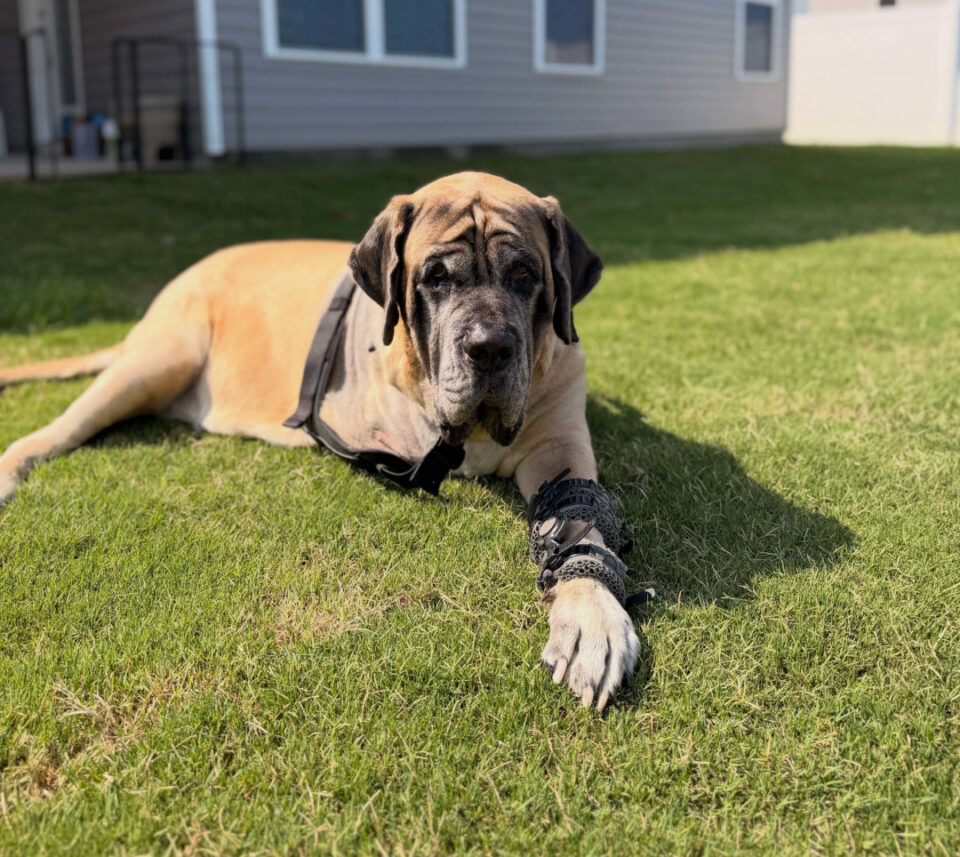
Adapting isn’t the Same as “No More Work to Do.”
When a dog or cat loses a limb, the remaining legs pick up the slack, permanently. Their body is constantly compensating. So to help our pups love a long healthy life on three legs, we’ve gotta do our best to protect those remaining limbs from injury.
A front-limb amputee, for example, supports nearly all their front-end weight on a single remaining leg. Most Tripawds handle this compensation beautifully. But handling compensation and carrying zero extra load are two different things.
A new educational white paper from the veterinary orthotics company WIMBA digs into what this means for three-legged dogs. We’re sharing it you, because the heart of it stuck with us:
Early orthotic support is not about treating failure. It is about protecting success.
What You’ll Learn in This White Paper
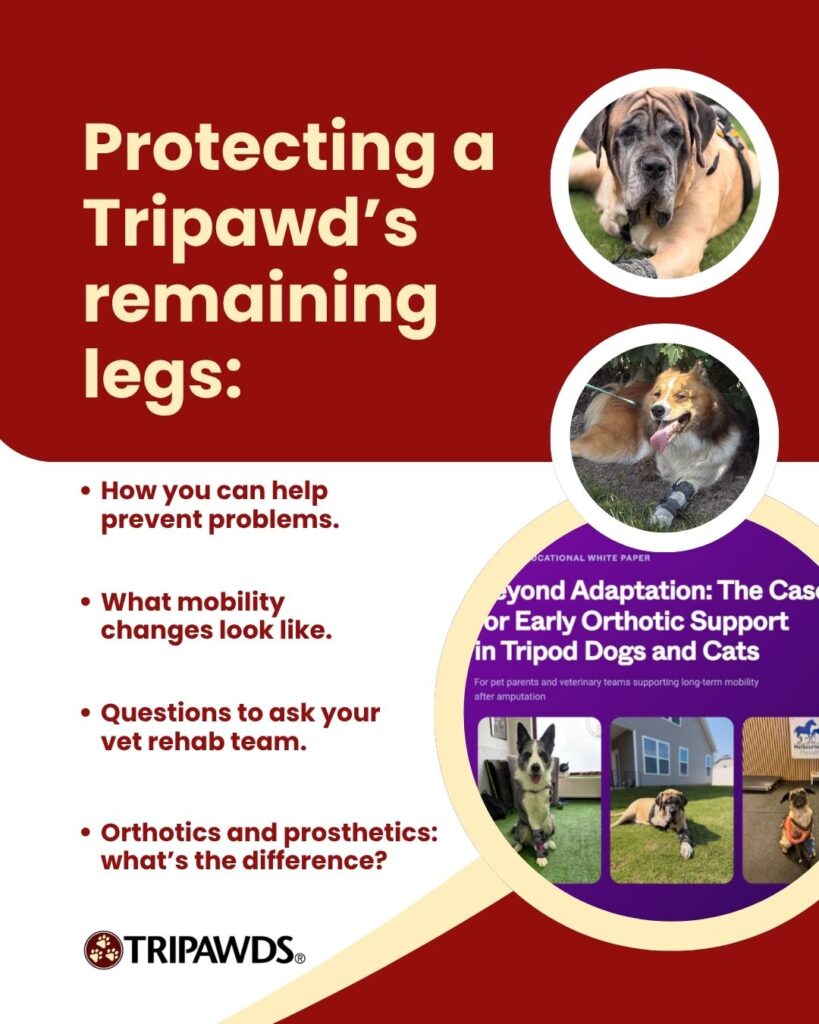
We think Wimba’s paper, Beyond Adaptation: The Case for Early Orthotic Support in Tripod Dogs and Cats, is worth sharing with everyone in our community. You’ll learn:
Why “adapting well” can still mean extra wear on joints and tendons
Mobility changes that can creep in slowly — stiffness, arthritis, wobbly wrists, less stamina
Why the remaining legs (and wrist) works so much harder after amputation
Orthotics vs. prosthetics: what’s the difference, and do you need one?
How to think ahead, instead of waiting for a problem to show up
Tripawds who deserve a closer look: big breeds, seniors, active dogs, or ones with old joint issues
We spend so much energy celebrating how well our pets adapt (as we should!) that it’s easy to assume the story ends there. In the paper, you’ll learn that it doesn’t.
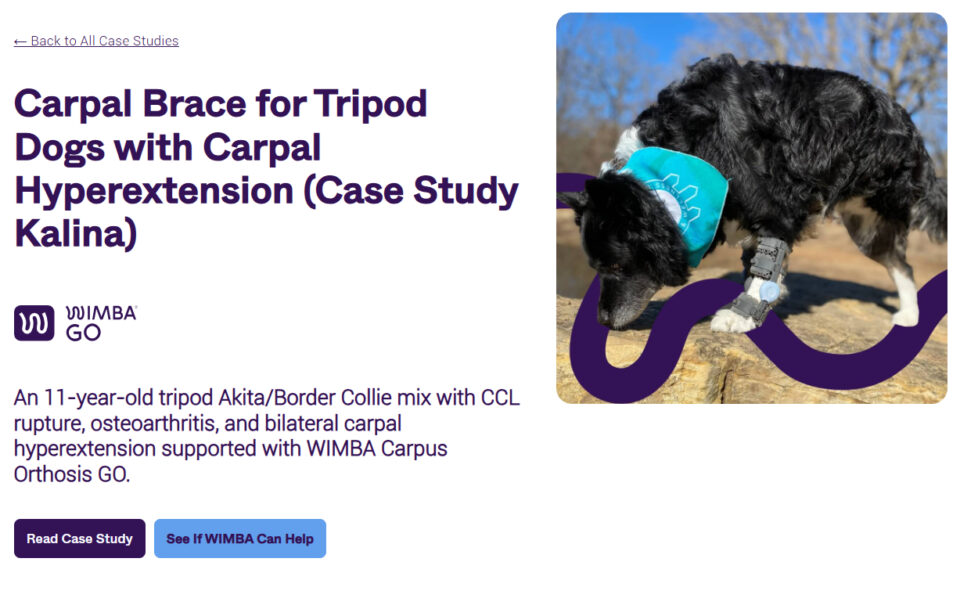
And you’ll learn that being proactive about support comfort, stability, and daily mobility really pays off, as Kalina’s story shows. This senior rear-leg amputee struggled with quite a few orthopedic conditions until her human found WIMBA.
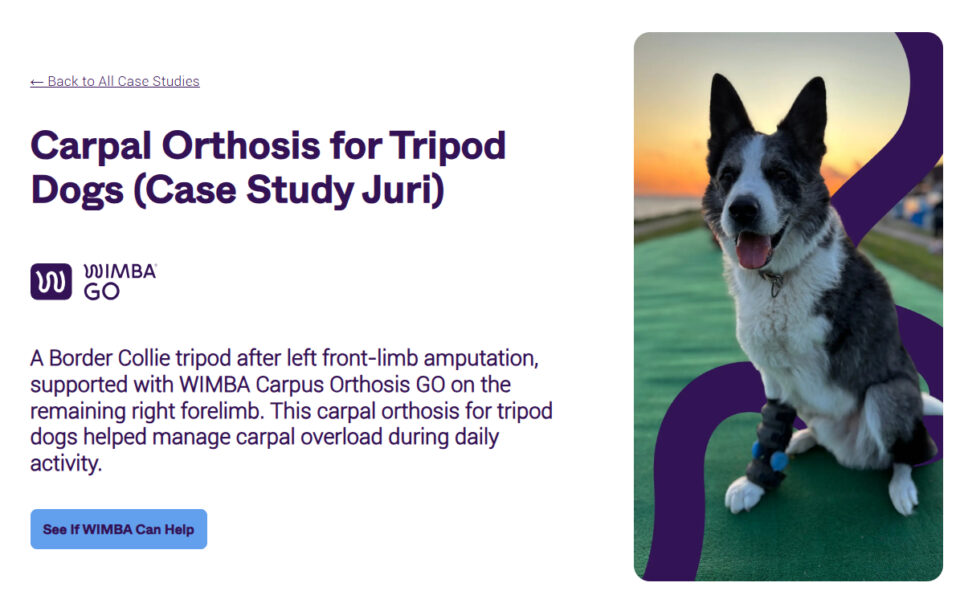
And when you learn how a front-leg amputee Border Collie named Juri began using a WIMBA carpal orthosis, we’re pretty sure you’ll be inspired to talk to your rehab team to find out if an orthosis is right for your Tripawd hero.
Get the Full White Paper
We partnered with the good people at WIMBA to make this free educational tool available. We think you’ll agree it’s helpful! Pop in your info below and we’ll send you straight to your inbox, plus a few resources to support your Tripawd’s long-term mobility.
Why we’re sharing this
This isn’t a paper that says every amputee dog needs an orthotic device. And we are not getting paid to tell you about it.
We just believe that this free download is a tool to help you understand where your amputee dog experiences extra stress on remaining limbs. And we hope it will kick off an informed conversation with your vet rehab team, before problems appear.
This WIMBA paper reflects what we’ve always believed at Tripawds: a little proactive care goes a long way.