When your dog or cat is diagnosed with a limb cancer (or a secondary cancer) but they aren’t a good candidate for amputation, radiation, or another big surgery, then what?
First, don’t panic. In some cases, treatment alternatives exist. Electrochemotherapy is one such option for some pets with certain cancers.
When amputation is not an option, here’s why electrochemotherapy is worth discussing with an experienced provider.
We are so happy we went! Codie Rae had two tumors removed, three teeth pulled, and ECT administered. She flew through recovery from the surgery and was on the road back home the second day after surgery. We’re a month out and so far so good. The inside of her mouth is still a little scary looking but appears to be healing well with no signs of infection or bone exposure (the main potential side effects). And best of all, no sign of anything growing back (you will recall after the excisional biopsy the first tumor was back in less than two weeks).
What is Electrochemotherapy?
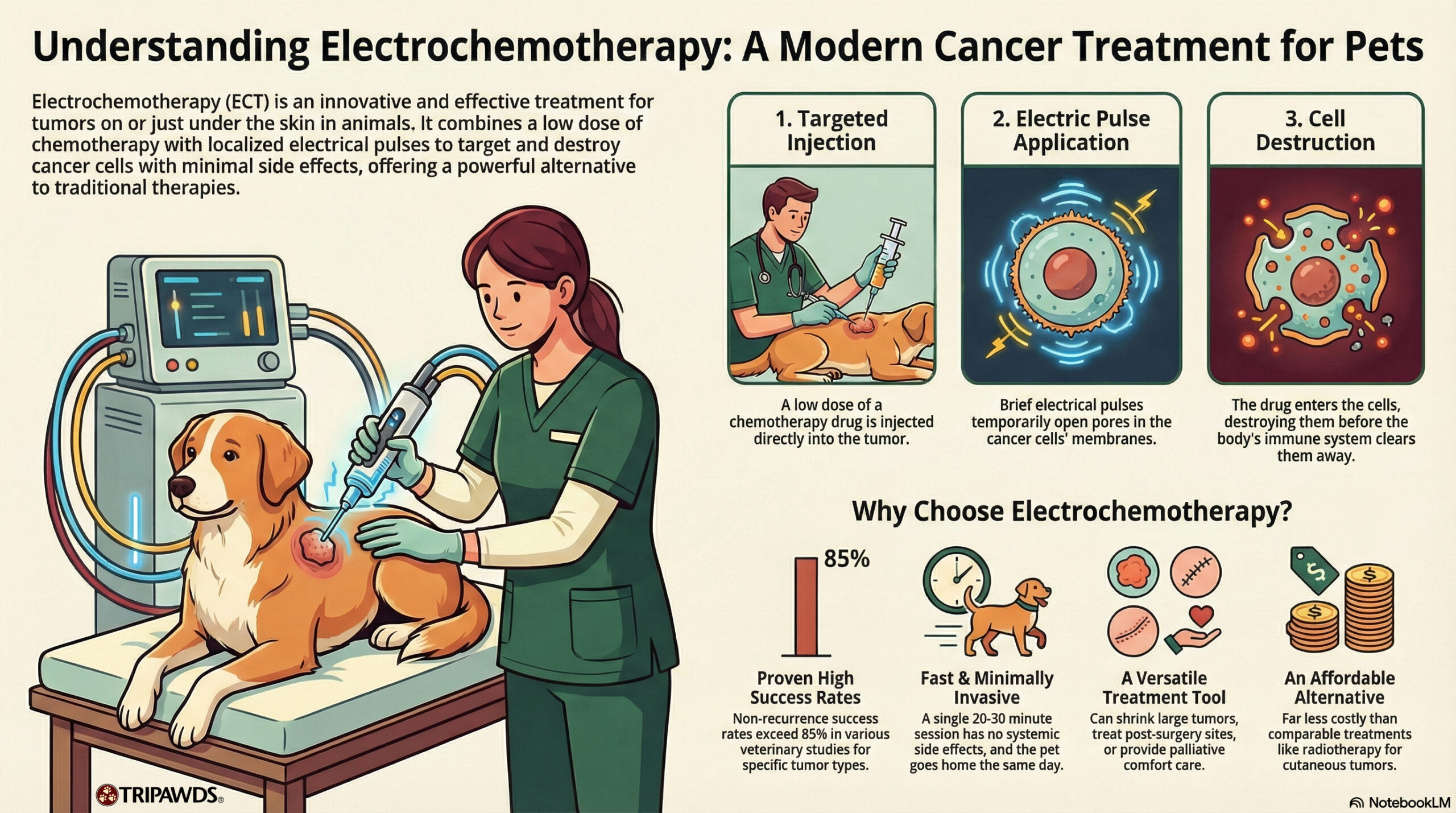
Electrochemotherapy is not new. It’s not widely practiced here in the United States, but in many other parts of the world it’s been a limb cancer treatment choice for many years.
Electrochemotherapy combines two elements:
- Chemotherapy drugs, usually delivered locally
- Short, controlled electrical pulses applied directly to the tumor
These electrical pulses temporarily open cancer cell membranes, allowing the chemotherapy to enter the cells more effectively. It also uses lower doses of chemotherapy drugs, which reduces the chance of side effects (which are already pretty low for pets).
Possible good candidates include pets who have:
Tumors on or just under the skin
Soft-tissue tumors
Tumors in areas where surgery is difficult or disfiguring
Certain limb tumors where amputation may otherwise be recommended
Read about Tripawds members who explored electrochemotherapy
The Benefits of Electrochemotherapy
When we first introduced electrochemotherapy back in 2019 with Dr. Jeannette Kelly, she shared key takeaways:
Treatments are typically short (around 30 minutes) and done under anesthesia
Most pets go home the same day
Side effects are generally localized rather than whole-body
In select cases, ECT has shown strong tumor control and low recurrence rates
It can be used as a primary treatment, alongside surgery or radiation, and when other treatments haven’t worked
Despite these benefits, access and awareness have remained limited and we can’t for the life of us figure out why.
An Updated Look at This Limb-Sparing Option with Joseph Impellizeri, DVM, DACVIM (Oncology)
We’re revisiting this topic because we recently discovered the work of Dr. Joseph Impellizeri, a board-certified veterinary oncologist and internationally recognized expert in targeted cancer therapies.
Here he is in an interview with past Tripawd Talk Radio guest Dr. Rachel Venable, in her podcast, Veterinary Oncology Pioneers.
This is a vet-centric podcast, but it’s worth a listen if you’re a pet parent debating amputation surgery for your pet. The full transcript is here.
Dr. Impellizeri has spent years advancing Targeted Electrochemotherapy as a way to offer alternatives to amputation surgery for dogs, cats, and other animals.
One of the most important key takeaways: equipment quality matters:
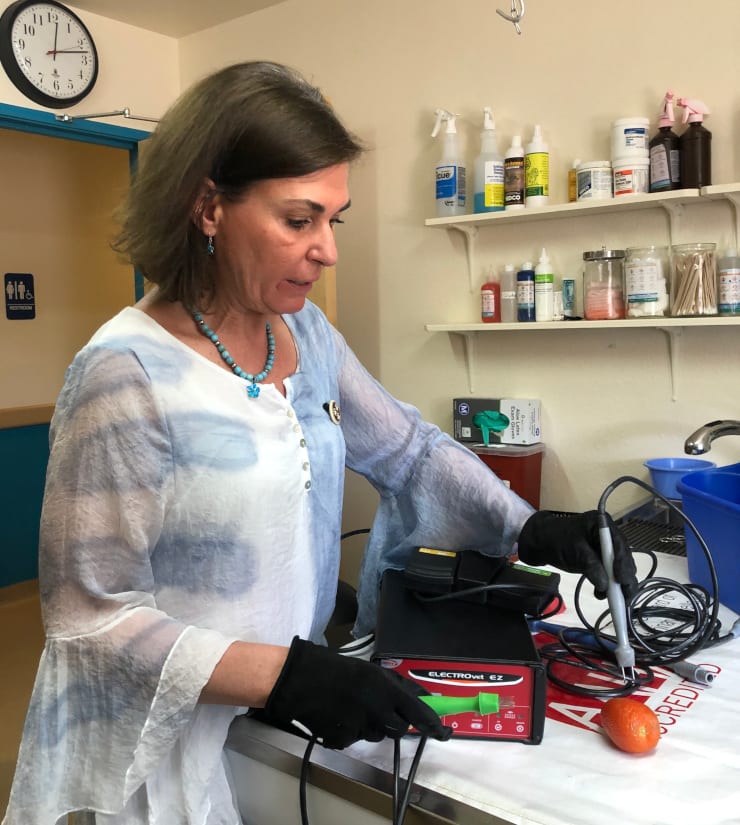
Having high quality, modern electrochemotherapy equipment determines treatment success. From the main unit to the electric probes, success is often based on the quality of the gear.
Some oncologists who have tried electrochemotherapy don’t look favorably on it because of negative experiences they had with a patient. But Dr. Impellizeri stresses that sometimes, a bad outcome might be caused by poor quality equipment.
The machines are very different. You would think that they’re all fundamentally the same, but they’re not. They are not. And because of that, you have machines that are more likely to cause necrosis, the dark blackening of tissue that unfortunately leads to quality of life issues to the patient.
And sometimes an owner regretting that they made a decision, whereas the better machines, the higher caliber machines, we have none of that. We don’t deal with any type of necrosis. I think it’s also a matter of, you’re going to pay more, but you’re going to get more.
The other thing is the electrodes, the electrodes really make or break the ability to treat. And some of the lower cost machines have electrodes, but they’re limited. And other companies have an array of electrodes that, we have one that basically slips on your finger. So you can put that into the oral cavity and get all the way down deeper into the throat in areas that normally were not accessible.
So I think the important thing is knowing there are differences …
Joseph Impellizeri, DVM, DACVIM (Oncology)
If you’re considering electrochemotherapy, you might want to get a second opinion from Dr. Impellizeri.
Where to Reach Dr. Impellizeri’s Team
Every diagnosis is different, and for many pets, amputation followed by recovery is the best choice. For some, especially those with localized limb tumors, electrochemotherapy could be an option.
You can contact Dr. Impellizeri for a consult. His team has offices in Rhode Island, New York, Florida, and Alaska.