If you have a bigger Tripawd, keep a close eye on that remaining leg’s elbow. Pressure sores and fluid-filled hygromas can happen, and cause problems if left untreated. But the good news is you have good options to prevent these issues.
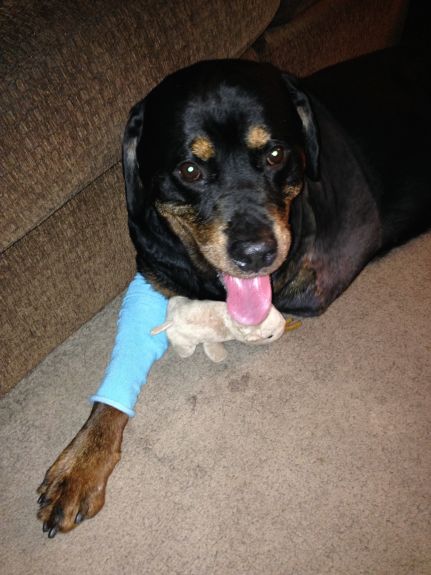
What You Need to Know About Pressure Sores Hygromas
Pressure sores and hygromas are related but a bit different from each other:
- Hygromas are fluid-filled swellings that develop under the skin on bony pressure points like the elbow or rear hock. They’re not tumors, but they do have a dense capsule of hard, rough skin that can look scary.
- A pressure sore is tissue damage from prolonged pressure that cuts off blood flow. The skin and underlying tissue break down, creating an open wound that can become infected.
These problems are especially prevalent in large and giant breed amputees.
When a Tripawd slides down to the floor on that remaining leg day after day, the bone hits hard. Over time, the body forms a pressure sore from the impact. A hygroma may also form as self-defense against the impact.
Pressure sores and hygromas can stay small and manageable. But sometimes they grow large, infected, and painful. Early attention is key.
Watch for These Warning Signs
Monitor your Tripawd’s remaining front leg daily. Sometimes rear-leg amputee dogs also get hygromas or pressure sores. The earlier you detect one forming, the better. Check for:
- Dark, scaly patches on the elbow
- Fluid-filled swelling
- Hair loss over the joint
- Excessive licking or chewing at the elbow
- Signs of infection (redness, heat, discharge)
Early detection makes treatment much simpler.
How to Prevent Pressure Sores and Hygromas
You can do four things to prevent pressure sores and hygromas in three-legged dogs:
Keep your Tripawd slim and trim
Overweight dogs are more prone to these problems. All that weight coming down on one front leg isn’t just bad for joints, it increases hygroma and pressure sore risk.
Add traction and no-slip rugs to your dog’s favorite lounge areas.
This acts as a barrier against hygroma and pressure sore formation.
Provide a firm, comfortable dog bed.
The more cushioning between your dog’s bones and hard floors, the better.
Use elbow protection
If you spot a hygroma or pressure sore forming, a protective sleeve can prevent it from getting worse.
Sheldon’s Story
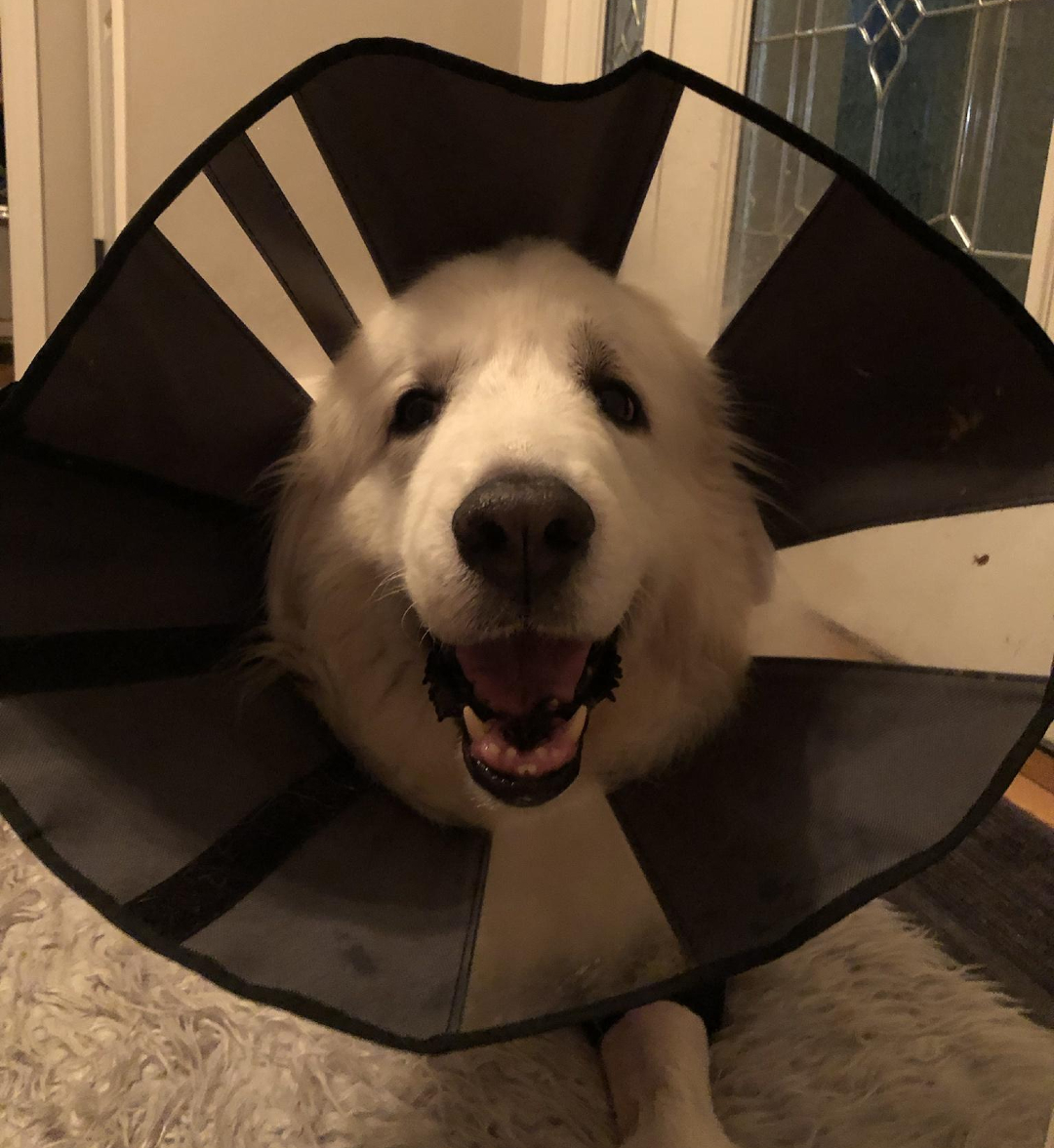
One Great Pyrenees Tripawd named Sheldon developed a pressure sore that split open. His vet surgically cleaned and sutured it, and with proper protection, he healed well. She shares his treatment and hygroma advice here in our post, “Tripawd Hygroma Healing Tips.“
“Once they become open wounds we need to treat them as such. Open wound treatment consists of regular (daily) wound management and bandage changes until we see healthy granulation tissue form,” says Sheldon’s surgeon, Dr. Tiffany Stockman Veterinary Emergency & Specialty Hospitals (VESH) in Massachusetts.
Treatment Options
First, have your vet examine the area. If a pressure sore or hygroma becomes infected or bursts, surgery may be needed.
Hygroma surgery removes the lumpy callous, but recovery can be long and stressful since the elbow has minimal skin. It can get complicated and difficult to heal the area.
“Hygromas that develop into wounds/ulcerations are the problem area. The reason they are so difficult to heal is that it is difficult to eliminate the trauma to that area so the wound cannot rest and recover,” says Dr. Stockman.
Other remedies vets may recommend:
- Drainage and bandaging (takes 1-5 weeks to fully reabsorb)
- Laser therapy to aid healing
- Silver Sulfadiazine cream for wound care
- Sugar and antibiotic packing to help the area granulate
The DogLeggs Solution for Tripawds
Here’s a not-inexpensive but incredibly effective option: DogLeggs Elbow Sleeves.
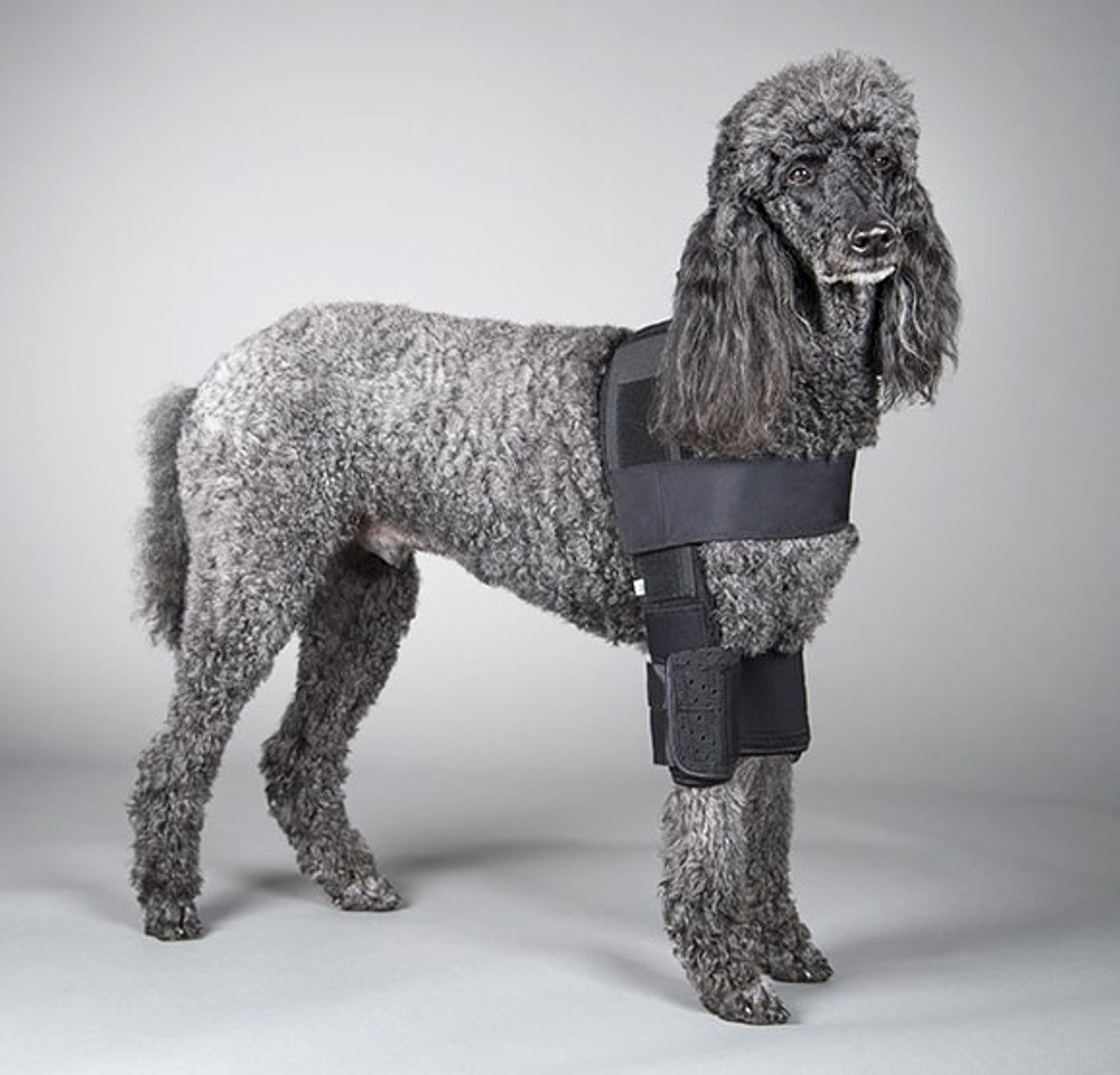
This device can be custom-tailored to your dog’s leg configuration. DogLeggs makes them based on your exact measurements and instructions. Their helpful customer support team always ensures a good fit.
Why we recommend DogLeggs:
- Custom fit ensures the sleeve stays in place during all activities
- Breathable, washable fabric made in the USA
- 24/7 protection or just during rest periods
- Veterinarian recommended for prevention and healing
- Proven results from real Tripawd families
Pro Tips for Using Elbow Sleeves
Keep the sleeve on for at least three weeks after the hygroma appears healed to ensure it doesn’t return. Combine with proper bedding and soft surfaces for maximum protection.
A Tripawd Pressure Sore Success Story
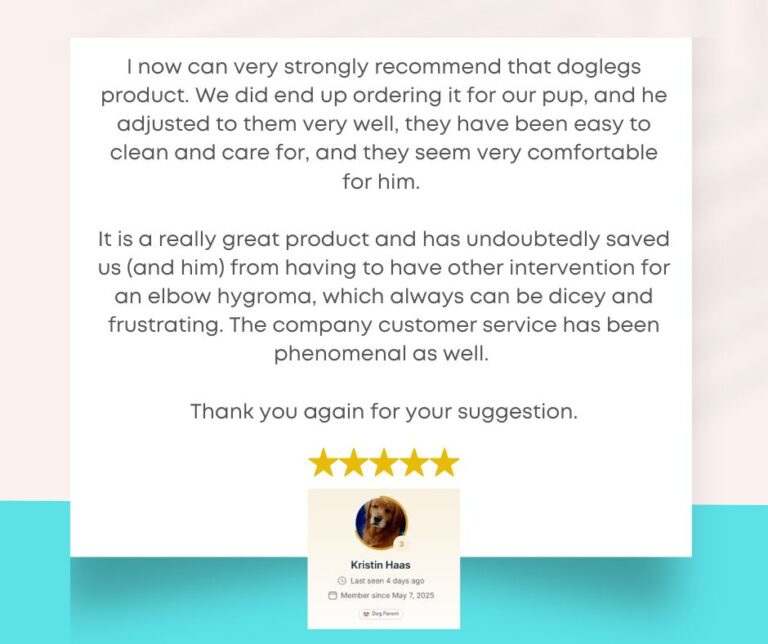
In an elbow protection conversation in the Tripawds Support Circle, Kristen, mom to front-leg Tripawd Rasta, says DogLeggs have been a game-changer:
The Bottom Line on Pressure Sores and Hygromas
Elbow hygromas and pressure sores don’t have to be inevitable for amputee dogs. When you keep a close eye on your dog’s legs, and taking the right precautions, you can keep your pup comfortable and injury-free.
If your Tripawd is already showing signs, don’t wait. Call your vet and check out DogLeggs custom elbow sleeves in our Gear Shop to protect that precious remaining leg.
Have questions or tips to share? Add to the elbow protection conversation in the Tripawds Support Circle!