Hooray! Your Tripawd’s stitches are out! And now, the real adventure begins. Here’s what every new Tripawd family should know to help their three-legged hero thrive for years to come.
TL;DR: The 4 things that matter most
Keep your Tripawd lean. Every ounce puts extra strain on three legs
Rethink exercise. Swap wild play for shorter, gentle walks and a slip-free home
Go to a rehabilitation therapist. You’ll get exercise tips customized for your Tripawd.
You’re already doing it right. By being part of Tripawds Support Circle, you’re ahead of the pack.
Your New Tripwad Isn’t Sad (but you might be)
Here’s something that surprises almost every new Tripawd parent: your dog or cat is probably handling this better than you are.
Animals don’t grieve a missing limb. They don’t compare themselves to four-legged friends. They want their breakfast, their favorite nap spot, and you.
What has changed is their body’s workload.
Three legs carry the same life as four used to. This means the small decisions you make every day for your Tripawd have a bigger impact than ever before.
The good news? You can do this!
Keeping Your Tripawd Slim is the #1 Thing You Can Do
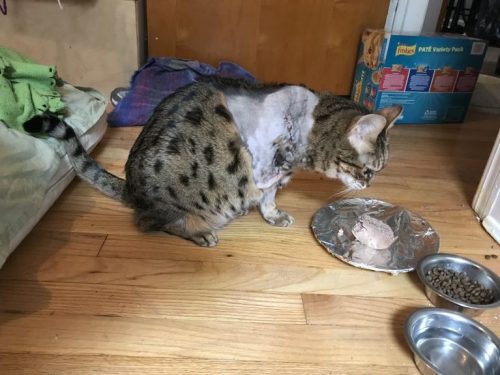
On a three-legged animal, every extra ounce of weight falls on joints that are already working overtime.
Orthopedic specialists put it bluntly: what feels like “fluff” to us can significantly speed up arthritis in a Tripawd. Arthritis hurts. It causes pain. A slim body profile reduces the risk.
One extra pound on a dog is roughly equal to five pounds on a human body. Keep your pet lean. It works better than any joint health supplement, and you’re giving their remaining joints the best gift possible.
Ask your vet about a target body condition score and get regular weigh-ins (they’re usually free!).
A slim body profile works better than any joint health supplement, and you’re giving your Tripawd’s remaining joints the best gift possible. Weight management one of the easiest jobs you have as a Tripawd parent.
Rethink Exercise: Shorter and Steadier Wins
The old school vet advice to “just let them be a dog” or “they figure it out” came from the right place. But today now know it can lead to serious injuries for amputees.
High-impact activities like chasing balls, catching frisbees, or jumping from furniture and cars put enormous stress on a Tripawd’s remaining joints, placing them at risk for a remaining leg surgery.
For dogs: Aim for 10–20 minute walks, two or three times a day, rather than one long run.
For cats: Block access to high perches like refrigerators or cabinets to prevent jumping injuries.
For both: First, look at your floors. Slippery hardwood or tile is genuinely exhausting for a three-legged pet. Trying to move on them with three paws is like walking on ice all day.
Rubber-backed rugs and carpet runners in key areas make a huge difference for their confidence and safety.
For both: Find enriching dog brain games and fun cat activities that stimulate the mind and minimize impact on the body.
To sum it up: take shorter, more frequent walks. Put rug runners on slick floors. Ban high jumps for cats. And please, donate the Chuck-it to your four-legged pals.
Rehab Therapy: This is When the Real Education Begins
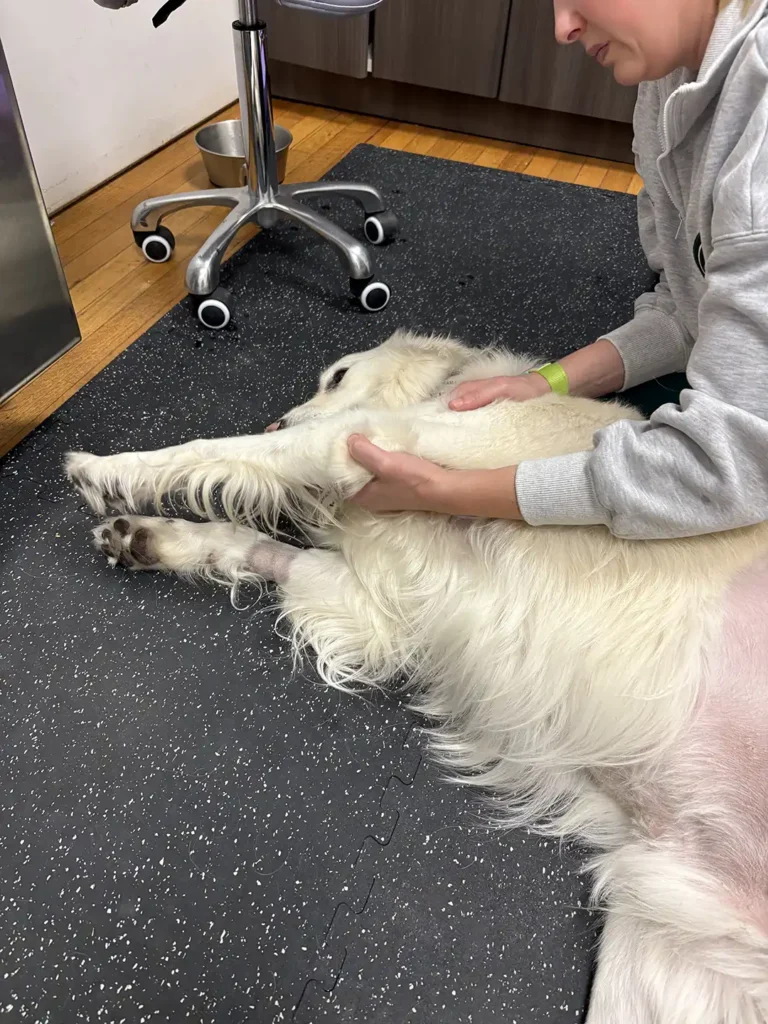
When the incision heals, you feel like you’ve crossed the finish line. Actually, that’s partially true.
At this point you’ve just reached the starting block for long-term wellness. And a visit with a rehabilitation physio therapist can get you and your Tripawd moving in the right direction.
A certified veterinary rehabilitation therapist can make an enormous difference, not just in recovery, but in your pet’s quality of life for years ahead.
Here’s what rehab / physio can offer Tripawd dogs and cats
Laser therapy and acupuncture can help the incision heal faster and calm the nervous system during the adjustment period.
Core strengthening and gentle stretching helps your Tripawd move as a coordinated whole rather than just “front end and back end.” This is especially important for preventing compensatory injuries, like neck and shoulder tension in front-leg amputees, or groin strains in hind-leg amputees.
Underwater treadmill sessions let your pet learn a steady gait with buoyancy doing some of the work. It’s so much gentler than land exercise, especially during recovery.
Even a single consultation gives you a customized homework plan to do at home. You don’t have to commit to weekly sessions for it to be worth it.
See what pet parents learn at a first-time Tripawds Rehabilitation Therapy Evaluation Visit!
The Maggie Moo Fund can help with the first rehab visit
If cost is a concern, the Tripawds Foundation’s Maggie Moo Fund for Tripawd Rehab can help reimburse your first evaluation with a certified therapist.
Don’t let budget be the thing that stands between your pet and a stronger start.
Congrats! You’re Already Doing This Right
The fact that you’re here, reading this, and looking for ways to support your Tripawd, that already puts you ahead of many other parents of three-legged dogs and cats who haven’t joined us yet.
Caring for a three-legged animal is a real partnership: you, your pet, and your vet team, all showing up together.
Small, consistent choices like a well-portioned meal, a rug by the back door, and a short but sweet morning walk all add up to years of healthy, happy life on three legs.
Your Tripawd hero is so lucky to have you in their corner!